
We transform environmental burden into clean energy. We are the exclusive distributor of patented technology that addresses one of the world's greatest challenges — safe and emission-free waste processing.
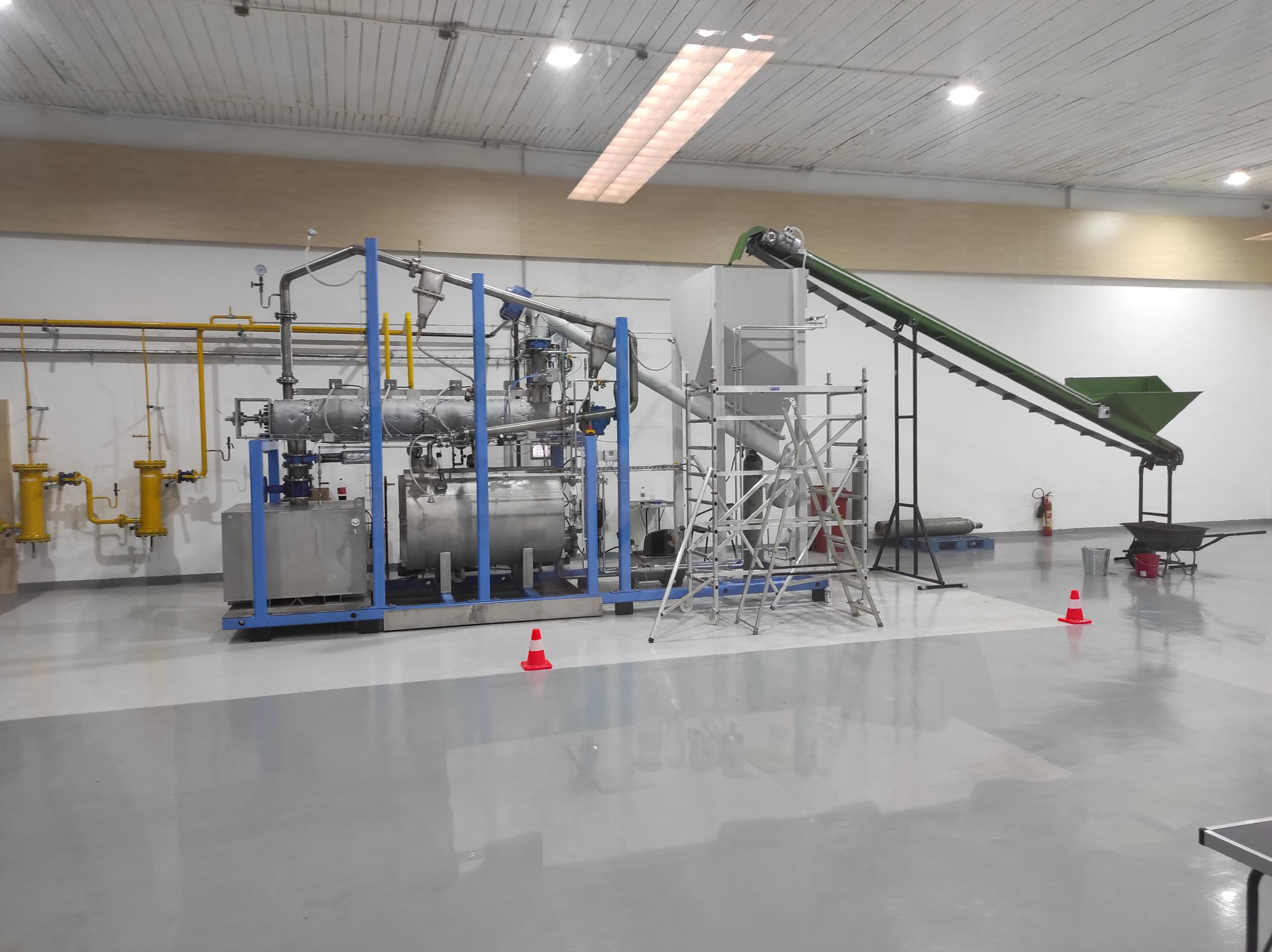
Advanced reactor technology. Our patented reactors represent the cutting edge in the processing of refuse-derived fuel (RDF). Unlike conventional methods, our process is:
Refuse-Derived Fuel (RDF) is a type of waste that has been collected, sorted, shredded, dried, and packed into designated bags. These bags serve as the primary feedstock for processing in our reactors.
RDF is highly storable and transportable. Once prepared, its volume is significantly reduced—often several times over—depending on the waste type. RDF can be safely stored in dry, covered facilities.
Our company does not handle the preparation of waste for reactor processing. However, upon request, we can recommend qualified suppliers or develop feasibility studies and project documentation for RDF preparation facilities. This includes full project supervision, commissioning, and testing.
We are not just looking for customers, we are looking for strategic partners. Our goal is:
The device is constructed on the basis of continuous, fractional and recombination thermal processing. In a hermetically sealed reactor, without access to atmospheric oxygen, molecular destruction and restructuring of high molecular complex spatial structures and their fractionation occur in a reducing environment, not by combustion, but only by increasing temperatures (in the range of 500 to 800 °C).
The high efficiency and effectiveness of this process is enhanced by multicyclic molecular destruction and partial fractional distillation. Classical pyrolysis cannot do this without multicyclic destruction and restructuring of molecules. Multicyclic molecular destruction with subsequent fractionation has a positive impact on the quality of the gas and liquid fraction and increasing their yield.